Home / Articles
What Is the Best Treatment for Acne and Redness After Liposuction?
Home / Articles
What Is the Best Treatment for Acne and Redness After Liposuction?
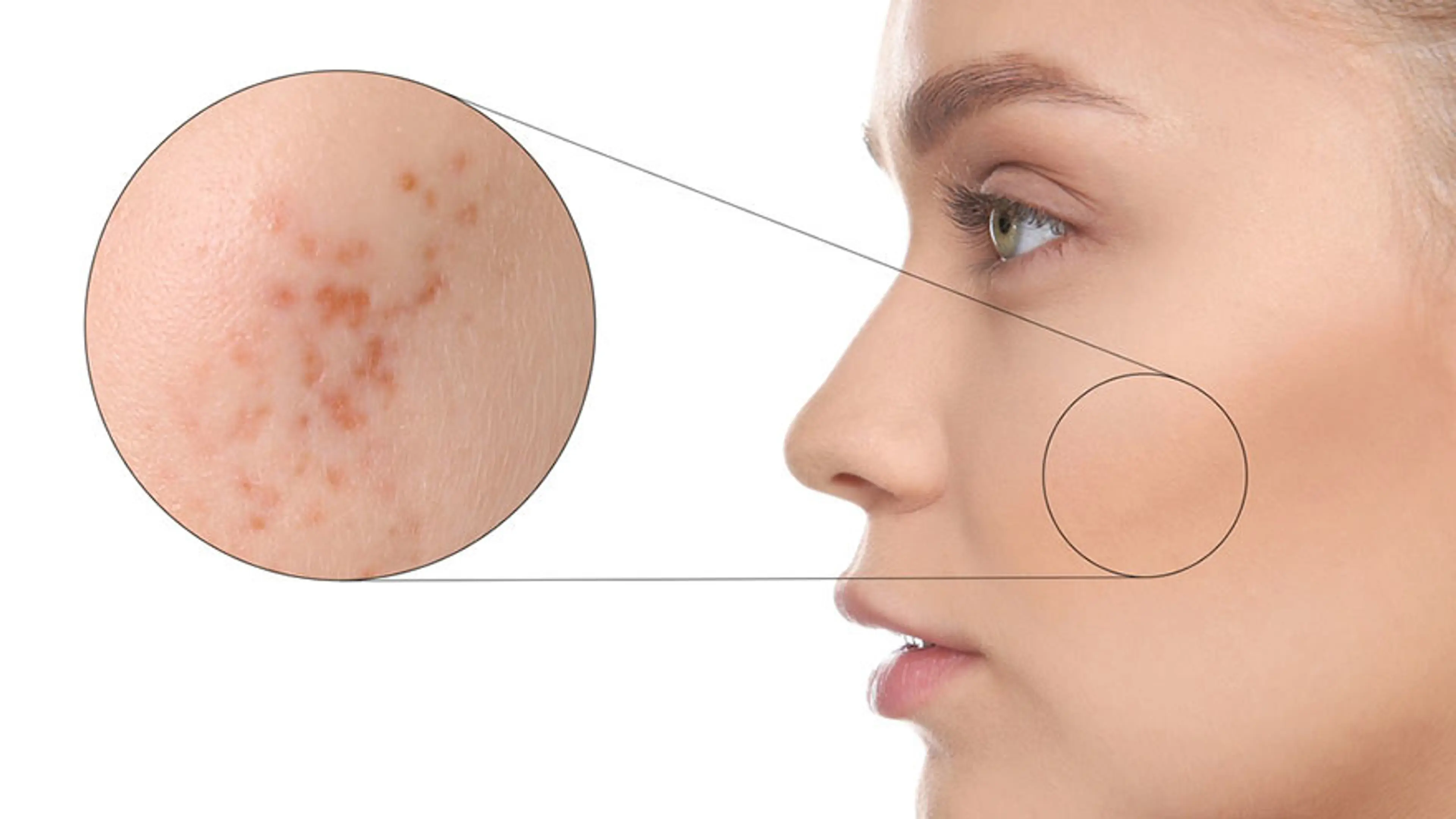
When most people think of liposuction, they imagine the final contour: a smoother waistline, slimmer thighs, or a more balanced silhouette. What’s less often discussed are the subtle skin reactions that can appear in the weeks after surgery — things like redness, small breakouts, or irritation around the treated areas.
To be clear, liposuction itself doesn’t “cause” acne in the way hormonal imbalances or clogged pores do. Instead, it creates a temporary environment where the skin is more reactive. Several overlapping factors play a role:
Once fat cells are removed, the skin must adjust to shifts in circulation, lymphatic drainage, and mechanical tension. This heightened sensitivity can make the skin more prone to redness, irritation, or a rash-like response — even from products that were previously well-tolerated.
Compression garments are essential for reducing swelling and ensuring smooth contours. But they can also trap heat and moisture against the skin, leading to blocked pores and breakouts. In areas where the garment rubs — under the breasts, along the waistband, or at the inner thighs — redness and acne-like irritation are particularly common.
Post-surgical protocols often include antibiotic ointments or disinfectants. While these are protective, they can also disrupt the delicate skin barrier if used for too long. Cleansers or creams that once felt gentle may suddenly sting or trigger redness on sensitized skin.
Surgery is a form of stress, and the body responds with fluctuations in cortisol and other hormones. These changes can increase oil production, leading to a flare of acne in patients who may never have struggled with it before.
Think of it this way: after liposuction, your skin is balancing on a thin line between repair and irritation. For most patients, these reactions are temporary and improve with proper care. But when breakouts or redness linger, targeted treatments can restore balance quickly.
The first step is always to simplify. Post-liposuction skin thrives on gentle, barrier-focused care.
At Yujin, we guide patients toward products formulated specifically for post-procedure use — these are designed to minimize reactivity while supporting wound healing. Over-the-counter acne products, particularly those with benzoyl peroxide or strong retinoids, are typically too aggressive during the healing stage.
LED therapy is one of the most effective non-invasive solutions for post-surgical skin reactions. It works by delivering targeted wavelengths of light to stimulate the skin’s natural healing pathways.
The advantage of LED therapy is its gentleness: there’s no heat, no downtime, and no risk of harming delicate post-surgical tissue. Patients often describe it as a relaxing spa-like treatment that doubles as medical-grade skin repair.
Here’s where Yujin’s philosophy makes a difference. Regenerative medicine isn’t reserved for dramatic anti-aging — it’s also one of the most effective ways to calm post-surgical skin.
Accelerate healing of micro-irritations caused by friction or compression.
Reduce prolonged redness by calming inflammatory pathways.
Support stronger barrier recovery, making the skin more resilient against future breakouts.
To use a metaphor, it’s like planting healthy seeds in rich soil — the skin heals faster, stronger, and more evenly. At Yujin, we often integrate regenerative care in the weeks following liposuction for patients prone to sensitive skin.
Sometimes the simplest change makes the biggest difference. If compression garments are too tight, poorly ventilated, or worn for excessive hours, they can become breeding grounds for irritation.
We encourage patients to:
Patients are often surprised at how quickly acne and redness improve once garment fit is optimized.
After the acute recovery phase (usually 3–6 weeks post-op), more proactive skin treatments can be introduced. These should always be cleared by your surgeon to ensure they won’t interfere with healing.
Timing is crucial. Done too early, treatments can irritate. Done appropriately, they can prevent long-term pigmentation or scarring.
In our experience, the biggest setbacks come not from surgery, but from overzealous self-care. It’s tempting to reach for the strongest acne gel or scrub when breakouts appear, but this often leads to more inflammation.
We recommend avoiding:
Post-liposuction skin thrives on restraint. Gentle, supportive care allows the skin to normalize on its own — with professional guidance when needed.
Here’s something patients often overlook: when skin issues arise after body contouring, the best outcomes come from continuity of care.
At Yujin, every stage — from surgery to follow-up to skin recovery — is overseen by the same doctor. That means if acne or redness appears, treatment is adjusted with full knowledge of:
How much fat was removed.
Which areas were treated.
How garments are being worn.
The patient’s individual healing patterns.
This continuity reduces the risk of both over- and under-treatment. It also ensures that the skin’s recovery is aligned with the surgical result — preserving smooth contours and avoiding unnecessary revisions.
To be honest, this is one reason why revision cases are lower in one-doctor clinics like ours. Patients aren’t passed from surgeon to nurse to aesthetician without context; everything is managed as one continuous journey.
Acne and redness after liposuction are usually temporary — but they shouldn’t be dismissed. Left unaddressed, they can prolong discomfort or even leave behind unwanted pigmentation. With the right approach — gentle skin care, LED therapy, regenerative treatments, garment adjustment, and professional follow-up — these issues typically resolve quickly, leaving no trace of the bumps and blotches that appeared along the way.
If you’ve recently undergone liposuction and noticed persistent breakouts or redness, consider consulting a clinic that blends surgical expertise with dermatologic precision. At Yujin Plastic Surgery, we see skin health as an essential part of body contouring — not an afterthought.