Introduction
introductionWhen people in Seoul talk about looking tired even after a full night’s rest, the culprit is often the eyes. The upper lids can feel heavy, while the lower lids can cast shadows that exaggerate fatigue. Eyelid surgery — known as blepharoplasty — is one of the most effective ways to restore a refreshed, youthful look. But here’s what many don’t realize: upper eyelid surgery and lower eyelid surgery are very different procedures, each addressing unique concerns.
At Yujin Plastic Surgery & Dermatology in Gangnam, we see patients who want clarity on which option suits their needs. Let’s break down the distinctions.
What Upper Eyelid Surgery Targets
what-upper-eyelid-surgery-targetsUpper eyelid surgery primarily corrects drooping or excess skin that gathers on the upper lid. In Korea, this often presents as a “hooded” appearance that hides the natural crease. This issue can be hereditary or a natural part of aging, as skin loses its elasticity and fat begins to redistribute.
Function + Aesthetics: Beyond aesthetics, severe sagging can interfere with vision, making the procedure not only cosmetic but also functional. Many patients report headaches or brow strain from subconsciously lifting their forehead muscles to see better.
Techniques Used: A carefully placed incision in the natural crease allows removal of excess skin, fine fat adjustment, and sometimes tightening of underlying muscle (levator repair). At Yujin, the goal isn’t a wide, artificial “double eyelid” but rather a natural, open gaze that complements the patient's facial harmony.
Double Eyelid Considerations: Some patients also seek to enhance or create a defined crease. In these cases, we incorporate nuanced techniques that respect the patient’s ethnic features while offering subtle enhancement.
Typical Patients: Adults in their 30s–50s who feel their eyes look smaller or heavier with age, or younger individuals with genetic eyelid heaviness.
What Lower Eyelid Surgery Addresses
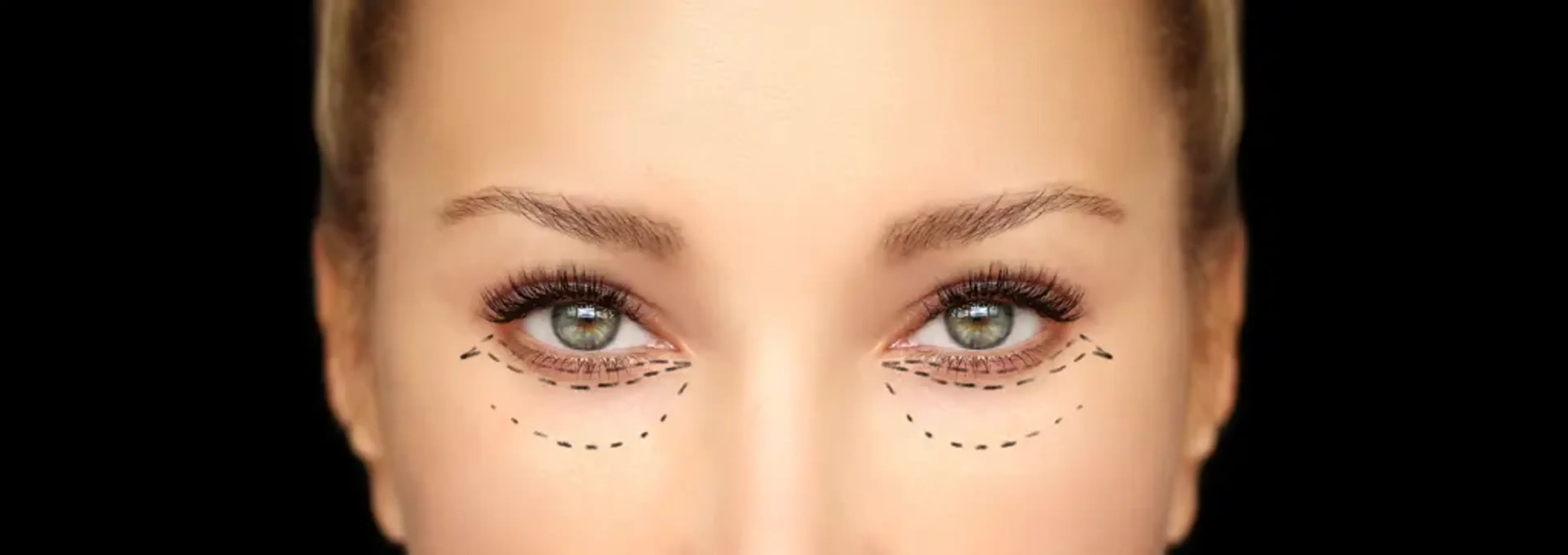
what-lower-eyelid-surgery-addressesLower eyelid surgery deals with the opposite problem: puffiness, under-eye bags, or hollowing that creates a tired look. These changes are typically caused by the weakening of orbital septum, which allows fat pads to protrude. In some cases, there is volume loss beneath the eye that exaggerates shadows.
Fat Repositioning vs. Removal: Instead of simply removing fat, modern techniques like those used at Yujin reposition fat to smooth the transition between the eyelid and cheek. Think of it as redistributing volume, not just subtracting it. This preserves a youthful contour and prevents the "sunken" look that plagued older blepharoplasty methods.
Skin and Muscle Tightening: For patients with fine wrinkles or lax skin, subtle tightening of the orbicularis oculi muscle or conservative skin trimming may be added. Precision is key: overcorrection can lead to functional and aesthetic issues like ectropion (outward turning of the eyelid).
Transconjunctival Approach: When skin quality is good, we often use an incision inside the eyelid, leaving no external scar. This method also preserves eyelid structure and minimizes downtime.
Typical Patients: Men and women in their late 30s to 60s who say, “People keep asking if I’m tired,” even when they feel energetic.
The Key Differences at a Glance
the-key-differences-at-a-glance
Upper eyelids: Focus on removing and lifting excess tissue.
Lower eyelids: Focus on rebalancing and smoothing fat and skin.
Upper surgery: Improves openness and alertness.
Lower surgery: Improves youthfulness and reduces tired shadows.
While both surgeries share the name "blepharoplasty," the anatomical challenges and goals are distinctly different. Understanding these nuances ensures that each patient receives a solution tailored to their unique aging process.
Recovery: What Patients Should Expect
recovery:-what-patients-should-expectBoth surgeries are typically performed under local anesthesia with sedation, offering a safe and efficient approach without general anesthesia risks.
Upper eyelids: Bruising and swelling are most noticeable in the first week. Sutures are typically removed around day 5–7. Most patients return to work or social life within 7–10 days. Light makeup can usually be applied after one week.
Lower eyelids: Slightly longer downtime due to the delicate under-eye tissue. Swelling can last 10–14 days, with final results continuing to refine over 1–3 months. With the transconjunctival method, healing is faster, and there's no visible scar.
Scars: Upper scars hide in the crease and become nearly invisible over time. Lower scars, when used, are placed just below the lash line or internally.
Patients are advised to avoid intense activity, alcohol, and salty foods for the first week. Cold compresses, head elevation, and prescribed ointments support a smooth recovery.
Why Natural Results Matter
why-natural-results-matterTo be honest, eyelid surgery has a bad reputation in Korea when done poorly — heavy double eyelids, hollow under-eyes, or “startled” looks that draw attention for the wrong reasons. At Yujin, we frequently treat revision cases where the issue wasn’t just surgical technique, but a lack of personalization.
Here’s what patients often overlook: eyelids age differently for every face. Some need more lifting, others more volume restoration. That’s why Dr. Tae-jo Kang’s one-doctor system is so valuable: the same surgeon evaluates, plans, and performs your procedure with continuity, reducing the risk of overcorrection or miscommunication.
We also take cultural and aesthetic preferences into account. For example, many Korean patients seek rejuvenation without losing their natural crease or eye shape. Subtlety is key — not every patient wants to look dramatically different, just less tired.
A Regenerative Touch: Fat Grafting with Eyelid Surgery
a-regenerative-touch:-fat-grafting-with-eyelid-surgery
In some cases, eyelid surgery alone isn’t enough. Hollow temples, volume loss in the mid-face, or sunken tear troughs can still make eyes look tired. That’s where Yujin’s expertise in HarvestJet fat grafting and regenerative therapies comes in.
By combining fat transfer with eyelid surgery, patients achieve a smoother, more balanced rejuvenation — not just “cut eyelids.” We use microfat and nanofat to replenish volume and stimulate skin quality in the periorbital area, helping eyes appear naturally brighter.
Think of it like tending a garden: trimming excess branches (upper eyelids) or smoothing the soil (lower eyelids) is important, but sometimes you need to add healthy growth (fat grafting) to make the whole landscape flourish.
This integration is especially important in mature patients where skin laxity, bone resorption, and fat atrophy occur simultaneously. Instead of treating each issue in isolation, we offer holistic planning for harmony.
Which Procedure Is Right for You?
which-procedure-is-right-for-youIf your upper eyelids feel heavy, block your vision, or hide your crease → Upper eyelid surgery may help.
If under-eye bags or hollows make you look tired or older → Lower eyelid surgery may be the better choice.
If both are true → A combined approach is often recommended.
The best results come from a precise evaluation, not a one-size-fits-all formula. During your consultation at Yujin, we assess muscle tone, skin elasticity, fat distribution, and even your eyebrow position. These factors guide not just what to treat, but how to treat it.
Closing Thoughts
closing-thoughtsEyelid surgery is one of the most transformative yet delicate procedures in aesthetic medicine. The difference between looking “done” and looking simply refreshed lies in the details — and in the philosophy of the surgeon.
At Yujin Plastic Surgery, the goal is never exaggeration. It’s about restoring balance, light, and youthfulness around the eyes in a way that feels entirely your own. Whether through precise surgical refinement or regenerative enhancement, we believe subtle, patient-centered artistry delivers the most satisfying results.
If you’ve been considering subtle facial rejuvenation, it may be time to explore whether upper or lower eyelid surgery — or a thoughtful combination — is right for you. For safe, natural, and doctor-led care, Yujin in Gangnam is here to guide you.