Home / Articles
Top Treatments for Acne Scarring: What Works Best?
Home / Articles
Top Treatments for Acne Scarring: What Works Best?
Anyone who has struggled with acne knows that the battle doesn’t always end when the breakouts fade. The skin often carries the memory of inflammation in the form of scars — subtle depressions, uneven texture, or persistent redness that can last for years. For many patients in Korea and beyond, acne scars feel just as frustrating as active acne itself, if not more.
At Yujin Plastic Surgery & Dermatology in Gangnam, we often meet patients who say: “I don’t mind my skin breaking out occasionally, but it’s the scars that make me look tired, uneven, or older than I feel.” That sentiment is both common and valid. Acne scars are not just cosmetic; they can influence confidence, self-presentation, and even the way makeup settles on the skin.
So, what truly works for acne scarring today — beyond creams and cover-ups? Let’s explore the most effective approaches, both regenerative and procedural, with a focus on what delivers real, lasting improvement.
Not all scars are created equal. Some patients develop shallow “rollings” scars, while others notice deep “icepick” or “boxcar” scars. The difference lies in how the skin heals after inflammation.
It’s also important to note that post-inflammatory hyperpigmentation (PIH) is often mistaken for scarring. PIH is the discoloration left behind by acne but doesn’t involve changes in skin texture. Treatments for PIH and true atrophic scars (indented scars) differ, which is why accurate diagnosis is key.
This is why the “best” treatment is never one-size-fits-all. A scar that looks stubborn in one patient may respond well to collagen induction, while another may need resurfacing or regenerative support.
Lasers remain one of the most trusted options for textural scars. Fractional CO₂ or erbium lasers work by creating micro-channels in the skin, triggering controlled healing and new collagen production. These micro-injuries stimulate fibroblast activity, which helps re-densify the dermal layer.
At Yujin, we assess skin type and scar severity before recommending ablative (stronger, more downtime) or non-ablative (gentler, less downtime) options. Patients usually need multiple sessions, spaced weeks apart, but the payoff is smoother, more even skin.
In Korea, where work-life balance often demands minimal downtime, non-ablative fractional lasers like Fraxel or LaseMD have grown popular. While these require more sessions, their safety on Asian skin types — with lower risk of pigmentation changes — makes them ideal for many patients.
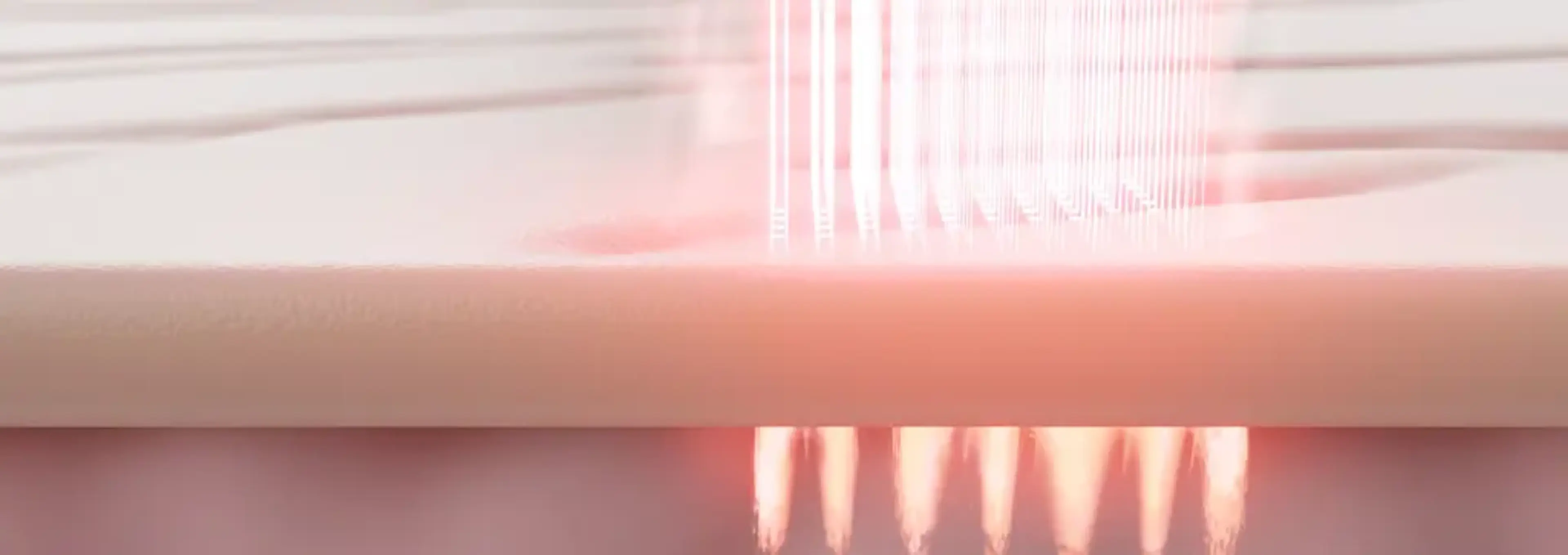
Microneedling, often likened to “a pen sowing seeds of collagen,” uses fine needles to create controlled micro-injuries. RF (radiofrequency) microneedling enhances this by delivering heat energy into the dermis, amplifying collagen remodeling and tightening lax skin.
RF microneedling devices like Secret RF or INFINI have been popular choices at Yujin for patients with rolling scars or early signs of aging. They’re safe for all skin tones and involve minimal recovery — usually a few days of redness or mild swelling. Unlike laser, there’s no risk of photosensitivity, which is ideal in Seoul’s four-season climate.
The key to results? Repetition and consistency. Patients often undergo 3 to 5 sessions, spaced 4 to 6 weeks apart, for visible smoothing and dermal thickening.
When scars are tethered by fibrous bands beneath the skin, no amount of resurfacing will lift them. Subcision directly releases these bands with a fine needle, allowing the surface to rise.
At Yujin, Dr. Kang performs subcision with meticulous control under local anesthesia. Because of our one-doctor model, patients benefit from precise adjustments and pairing with complementary treatments in a single session.
This is where clinics like Yujin offer a unique advantage. Fat grafting isn’t just for volume loss in aging — it can also help acne scars. By transferring a patient’s own micro-fat enriched with stromal vascular fraction (SVF) or stem-cell–like components, we create a regenerative environment in the skin.
Think of it as “planting healthy cells in depleted soil.” The transplanted cells don’t simply fill scars; they stimulate repair, enhance elasticity, and improve overall skin tone.
For patients with both atrophic scarring and early signs of aging, this dual benefit is particularly powerful. Over months, patients often report not just improved scar texture, but brighter, more youthful skin overall.
While less cutting-edge, these methods still have a place. A medium-depth peel like TCA (trichloroacetic acid) can lift superficial scars and refine skin tone. Phenol or combination peels may be used in deeper cases, though with greater recovery time.
Dermabrasion — different from the gentler “microdermabrasion” found in spas — mechanically removes the top layers of skin, smoothing elevated or uneven edges. At Yujin, we reserve this for specific scar patterns and combine it with regenerative support when appropriate.
In Korea, where patients often seek subtlety and minimal downtime, peels are usually integrated into combination therapies rather than used alone.
For isolated, stubborn depressions, hyaluronic acid fillers can give instant improvement. These are particularly effective for shallow boxcar or rolling scars and can last 6 to 12 months.
However, at Yujin, we often recommend regenerative injectables for longer-term benefit. PRP (platelet-rich plasma) drawn from the patient’s own blood releases growth factors that support healing and collagen production. Stem cell–derived therapies, though still evolving, show promise in improving skin quality and accelerating repair.
These are often paired with subcision or microneedling to deliver actives precisely where the skin needs regeneration.
At Yujin Plastic Surgery & Dermatology in Gangnam, acne scar treatment is not just about resurfacing the surface. Dr. Tae-jo Kang integrates advanced fat grafting and regenerative methods with proven dermatologic procedures. The philosophy is simple:
Heal from the inside out, not just cover the scar.
Preserve natural skin texture — never an “over-polished” look.
Deliver results that last years, not months.
Because every patient is treated directly by Dr. Kang under our one-doctor system, care remains consistent and deeply personalized. Whether it’s your first session or a multi-treatment plan, your skin’s evolution is continuously monitored and adjusted with artistry and precision.
If you’ve been living with acne scars, the question isn’t just “Which treatment is best?” but rather, “Which combination is right for my scars, skin, and lifestyle?”
For some, that may be a series of fractional laser sessions. For others, subcision paired with regenerative fat grafting creates the breakthrough. And for patients seeking global improvement — smoother texture, better elasticity, brighter tone — a layered, regenerative approach often provides the most satisfying transformation.